
Piano Lessons Rates In Singapore
How Much Are Students Really Paying?
One of the frequently asked questions by parents and students when they enquire about private piano lessons, they want to know what’s the lesson rates.
Some schools or agencies state the lessons rates quoted by the teachers as a guide. We can do that too, but we don’t find it useful. Schools and teachers can quote whatever they want, but that does not mean parents and students will pay for it.
Hence we thought… why don’t we state the fees that parents and students are already paying for?
After matching hundreds of students since 2014, here are the range of fees that parents and students paid for piano lessons.
*Grade 1 – $35/45min to $70/hr
*Grade 2 – $40/45min to $70/hr
*Grade 3 – $45/45min to $70/hr
Grade 4 – $50/45min to $80/hr
Grade 5 – $55/hr to $80/hr
Grade 6 – $60/hr to $85/hr
Grade 7 – $65/hr to $90/hr
Grade 8 – $70/hr to $110/hr
Diploma – $80/hr to $120/hr
*Theory sessions are usually included in beginner to Grade 3 lessons. Separate lessons are usually required for higher grades of theory, hence, will be separately charged.
Fees usually depends on the qualification and experience of the teacher. But why is there such a big range of fees paid?
Let’s look deeper into the fees.
Frequently Asked Questions About Piano Lesson Fees
Lesson Fees & Pricing Tiers
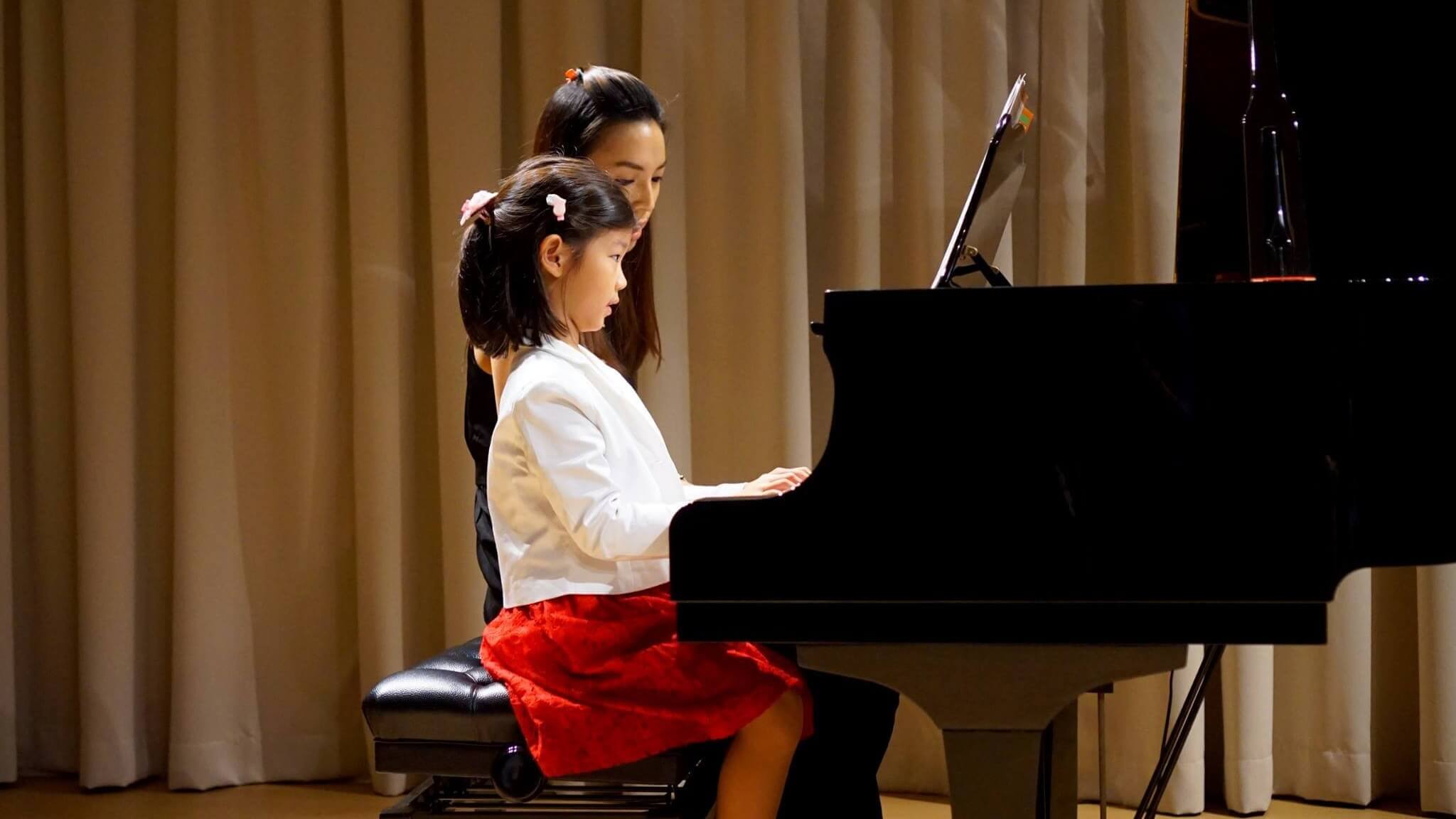
How much do private piano lessons cost in Singapore?
Private piano lessons in Singapore typically cost between $35 and $120+ per lesson, depending primarily on the student’s grade level and the teacher’s qualifications. Beginner lessons generally start at $35 to $55 per lesson, while advanced diploma-level coaching ranges from $80 to $120 or more per lesson.
What affects the price of piano lessons?
The price of piano lessons in Singapore is primarily determined by teacher qualifications, student grade level, lesson duration, and lesson location.
Key price-determining factors include:
Teacher Qualifications & Track Record: Experienced music degree holders, music conservatory graduates, or teachers with high student distinction rates charge higher rates than normal teachers.
Student Level & Exam Preparation: Higher ABRSM or Trinity examination grades require more experienced teachers, which comes with higher fees.
Lesson Location: Private piano lessons at student home usually has a slight premium over lessons conducted at a teacher’s studio to cover travel time.
Duration & Frequency: Standard sessions last 30 to 45 minutes for young beginners and 60 to 90 minutes for intermediate and advanced students.
How do teacher qualifications affect the price of piano lessons at The Happy Pianist?
At The Happy Pianist, piano lesson fees increase proportionately with a teacher’s qualification level and credentials.
Higher qualifications reflect advanced technical mastery, specialized teaching methods, and expertise in preparing students for higher-level examinations and performances.
Teacher qualification tiers and typical fee structures include:
- Grade 8 Certified Tutors (ABRSM / Trinity): Ideal for young beginners and foundational learning.
- Associate Diploma Holders (ARSM, ATCL): Suited for beginner to early intermediate exam preparation.
- Licentiate & Fellowship Diploma Holders (LTCL, LRSM, FTCL, FRSM): Recommended for intermediate to advanced students (Grades 6–8).
- Degree & Post-Graduate Music Graduates (Bachelor’s, Master’s, or Doctorate in Music): Tailored for advanced performers, diploma candidates, and competitive students.
How does a teacher's experience affect the price of piano lessons at The Happy Pianist?
At The Happy Pianist, piano lesson fees reflect a teacher’s years of practical experience, achievements, student exam success rates, and active performance background.
As a teacher’s depth of experience, track record of student distinctions, or institutional affiliations grow, their lesson rates increase accordingly.
Teacher experience tiers at The Happy Pianist include:
- Junior Teachers (1–2 Years Experience): Early-career teachers suitable for beginners building basic interest or learning for leisure
- Senior Teachers (10–20+ Years Experience): Experienced teachers with deep experience in lesson planning and long-term student development.
- Distinction Track Specialists: Teachers with a proven history of preparing students for ABRSM exams who consistently achieve high distinction rates.
- Competition Coaches: Experienced teachers specializing in preparing students for local and international music competitions, helping students win awards, build stage presence, and master high-level contest repertoire.
- Performing Artists: Teachers who are also concert performers, corporate event musicians, and pop/rock band pianists who bring real-world stage experience, contemporary styles, and live performance techniques into their teaching.
- College & University Lecturers: Higher-education music faculty who coach diploma candidates, advanced performers, and aspiring professional musicians.
Are home piano lessons more expensive than lessons at a teacher's studio?
Yes, and No.
While home piano lessons often include travel costs, total lesson fees depend more on the teacher’s qualification level and experience beside the location alone
When evaluating home vs. studio piano lessons:
- Home Lesson Travel Expenses: Private home lessons may carry a modest travel fee of $10 to $30 per session to cover teacher commute time and transportation expenses.
- Fees Can Still Be Higher at Teacher’s place, if lessons is taught by a higher qualified and experienced teacher.
- Location Flexibility: Learning at home offers schedule convenience for busy families, while studio lessons provide access to better pianos or specialized studio equipment.
At The Happy Pianist, we work with experienced teachers who provide both home lessons at student’s place or at teacher’s own studios nearby your area. Both options are available!
How long is each piano lesson at The Happy Pianist?
Piano lessons at The Happy Pianist typically last 30 minutes, 45 minutes, 60 minutes, or 90 minutes per session, depending primarily on the student’s age, examination grade level, and specific performance goals.
Longer session durations allow teachers to cover technical exercises, sight-reading, theory, and complex piece repertoire in depth.
Recommended piano lesson durations at The Happy Pianist include:
- 30-Minute Lessons: Ideal for young beginners (ages 3 to 4) for building early interest and fundamental hand posture without exhausting their attention span.
- 45-Minute Lessons: Suited for older beginners, adult leisure learners, and early-grade exam students (Grade 1 to Grade 3) balancing practical playing with basic music theory.
- 60-Minute (1 Hour) Lessons: Recommended for intermediate to advanced students (Grades 4 through 8) needing dedicated time for longer, complex exam pieces, scales, and technical polish.
- 90-Minute (1.5 Hour) Lessons: Tailored for diploma-level candidates, advanced performers, or students in final preparation stages for upcoming ABRSM/Trinity grading exams, competitions, and stage recitals.
How often should beginners take piano lessons in Singapore?
Beginners should take private piano lessons at least once a week for consistent skill development, though taking two lessons per week accelerates progress and builds stronger practice habits.
Weekly sessions ensure that young students receive regular technical correction, preventing bad posture or finger habits before they become ingrained.
Frequency options for beginner piano lessons include:
-
- Once Per Week (Standard): Ideal for most beginners and young children. Provides a steady pace, allowing 6 days of home practice between lessons to reinforce new concepts without overwhelming the student.
- Twice Per Week (Accelerated Progress): Recommended for young children who need frequent teacher guidance during home practice, or students aiming to fast-track their foundational reading and ABRSM/Trinity exam preparation.
- Consistent Weekly Routine: Consistency is critical for muscle memory and ear training; bi-weekly or irregular lessons are generally not recommended for beginners as progress slows significantly.
Are there registration, administration or matching fees?
Nope, no registration fee, no administration fee, no matching fees, no GST. Parents and students only pay for fees for lessons.
Can I book one trial piano lesson before committing?
Yes, you can book one trial piano lesson first with our Happy Pianist teachers and see how it goes. If the class is good, you can arrange further lessons from there.
Choosing the Right Teacher Level
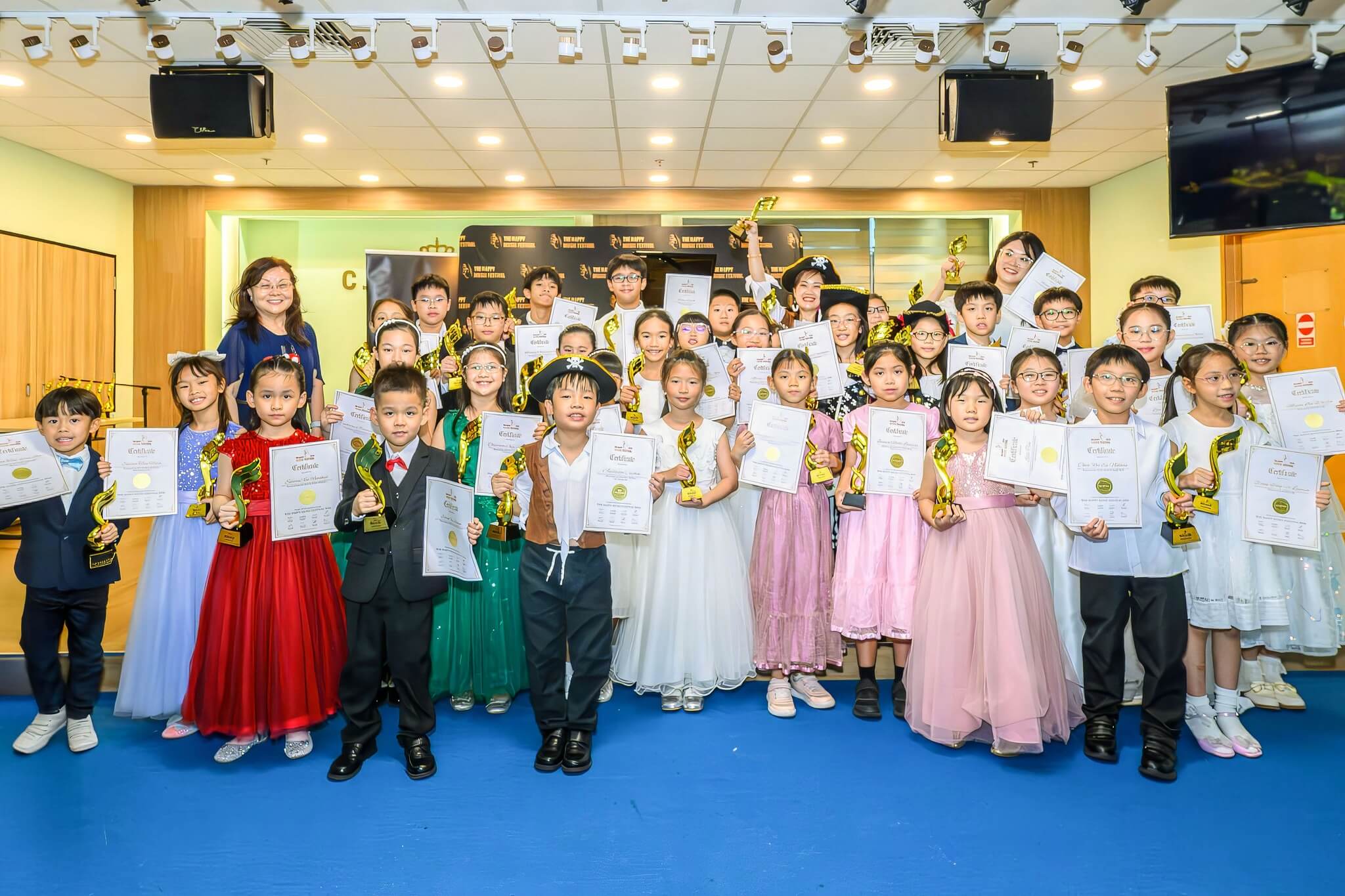
Are all music degrees equal when choosing a piano teacher in Singapore?
No, the quality and recognition of a music degree vary significantly depending on the institution’s global accreditation, admission standards, and curriculum rigor.
Teachers music holding degrees from internationally recognized conservatories and accredited universities undergo competitive auditions and comprehensive pedagogical training, ensuring higher instructional quality compared to degrees from non-accredited or unranked institutions.
Key factors to consider regarding a piano teacher’s degree include:
- Accredited First-Tier Regions: Most major universities and conservatories in first-tier educational regions, such as the UK, USA, Australia, Europe, Japan, Hong Kong, and Singapore, are fully accredited and enforce rigorous admission standards, comprehensive pedagogical training, and strict performance benchmarks.
- Reputable Institutions & Conservatories: Examples of globally recognized music institutions include the Royal College of Music (UK), Royal Academy of Music (UK), Juilliard School (US), Berklee College of Music (US), Tokyo University of the Arts (Japan), Hong Kong Academy for Performing Arts (Hong Kong), Yong Siew Toh Conservatory of Music (Singapore), LASALLE College Of The Arts (LASALLE, Singapore), and Nanyang Academy of Fine Arts (NAFA, Singapore).
- Verification & Transparency: At The Happy Pianist, we verify teacher credentials and certificates to ensure qualifications come from recognized institutions rather than unaccredited lower-tier institution. This ensures that parents pay the right fee for genuine, accredited expertise.
My child has been learning piano for 2 to 3 years at a music school but still not at ABRSM Grade 1 Level. How can I fix slow progress?
Slow piano progress is usually due to group class limitations, rigid school syllabus, frequent teacher changes, or skipped technical foundations.
When a child’s learning stalls after several years, transitioning to 1-on-1 private home piano lessons allows an experienced teachers to diagnose root technical gaps and customize the pacing specifically for your child.
The primary causes of slow progress at music schools (especially big music chains) include:
- Lack of Individual Focus in Group Classes: Group environments split the instructor’s attention across multiple children, preventing the personalized posture, hand technique, and note reading correction needed to master full songs.
- Rigid and Slow Syllabus: Schools with self-created unproven curriculum are often slow with one-size-fits-all lesson plans rather than adapting to how fast or slow an individual child learns.
- Frequent Teacher Turnover: Music schools with high teachers turnover, causes students to repeatedly adapt to a new teacher, and this disrupts learning momentum and delays progress.
- Skipped Foundational Skills: Inexperienced school teachers may rush students through songbooks (to impress parents) without building solid note reading foundation, leading to stagnation for 2 to 3 years
At The Happy Pianist, we recommend a dedicated private teacher to provides consistent, long-term mentorship, fixes wrong foundational habits, and selects engaging repertoire so students quickly learn to play full, complete pieces.
Which piano teacher level should I engage if I want my child to start on a proper exam syllabus right from the beginning?
To establish a rigorous exam track right from the start, we suggest engaging a Senior Teacher (10-20+ years experience), a Distinction Track Specialist, or a Licentiate/Fellowship Diploma holder (LTCL/LRSM).
Experienced exam specialists ensure proper finger technique, sight-reading proficiency, and formal music theory from lesson one, minimizing the need to correct bad habits later on.
- Recommended Teacher Level: Senior Teachers or Licentiate/Fellowship Diploma Teachers ($60 – $80 or higher per lesson).
- Focus Areas: Structured ABRSM or Trinity syllabus progression, exam preparation, scales, sight-reading, and formal technique.
- Outcome: Higher distinction rates and smooth progression into intermediate and advanced grades (Grades 3 through 8).
Which piano teacher level should I engage if my child just wants to try and explore piano for fun?
If your child wants to explore piano for fun without exam pressure, a Junior Teacher (1-2 years experience) or an Associate Diploma (ARSM/ATCL) holder is ideal.
These instructors specialize in creative, engagement-first teaching methods that build early musical interest, foundational hand technique, and rhythm skills through popular tunes and enjoyable repertoire.
- Recommended Teacher Level: Junior Tutors or Associate Diploma Tutors ($35 – $50 per lesson).
- Focus Areas: Play-based learning, basic music reading, hand coordination, and building a habit of practice.
- Flexibility: Students can transition to formal ABRSM or Trinity exam syllabus later if their interest grows.
Other Lesson Considerations
My child is only 3 or 4 years old. Are they ready to start private piano lessons?
Children as young as 3.5 to 4 years old can start private piano lessons. The program for young children will be specifically adapted for early childhood development.
At this age, lessons should focus on rhythm games, singing, listening skills, key recognition, and finger coordination rather than technical exercises or long practice sessions.
Key considerations for 3+ to 4-year-old beginners include:
- Lesson Duration: 30-minute sessions are recommended to match a young child’s natural attention span.
- Teacher Selection: We recommend Happy Pianist teachers who are patient with young children and has experience in conducting early childhood music education which uses games, magnetic rhythm tiles, and visual aids.
- Parental Involvement: Parents can also sit in lessons to help guide short, 5- to 10-minute daily practice sessions at home.
My child has been learning piano for years but is losing interest. Can a new teacher fix this?
Yes, switching to a new piano teacher often reignites a student’s passion by introducing fresh teaching methodologies, engaging repertoire, and a better personality fit. Stagnation usually occurs when a student feels overwhelmed by rigid exam prep or bored by repetitive pieces.
How a teacher transition helps:
- Repertoire Shift: A new teacher can temporarily pause exam drills to introduce popular pop tunes, Disney/movie soundtracks, or any songs of the students’ interest to rebuild excitement.
- Fresh Pedagogical Approach: Different teachers bring unique communication styles that can turn practice from a chore into an enjoyable routine.
- Faster & Better Progress: When a student is stuck at the same level for too long, motivation will drop. A new teacher provides fresh guidance, helping the student break through plateaus and rebuild confidence.
There are various reasons a child lose interest in music. Our experienced teachers at The Happy Pianist will evaluate whether current frustration stems from hidden technical gaps (e.g., poor reading or hand tension) or exhaustion from drilling, and propose suitable plans to guide the child forward.
I am an adult beginner with no music background. Is it too late for me to learn piano?
It is never too late to learn piano as an adult, and adult beginners often progress faster in music theory and note reading than young children. While children develop physical flexibility faster, adults possess superior focus, analytical understanding, and personal motivation.
Adult lesson features at The Happy Pianist include:
- Customized Learning Track: Adults can skip laerning kids nursery rhymes and focus on their favorite classical pieces, pop songs, starting from simple ones.
- Flexible Scheduling: Teachers can accommodate busy work schedules with evening or weekend home lessons.
- No Exam Pressure: Lessons are tailored purely for personal enjoyment, stress relief, and cognitive wellness. If student is keen to take exam certification for personal achievements, teachers can prepare too.
We do not own an acoustic piano yet. Can my child start lessons using an electronic keyboard or digital piano?
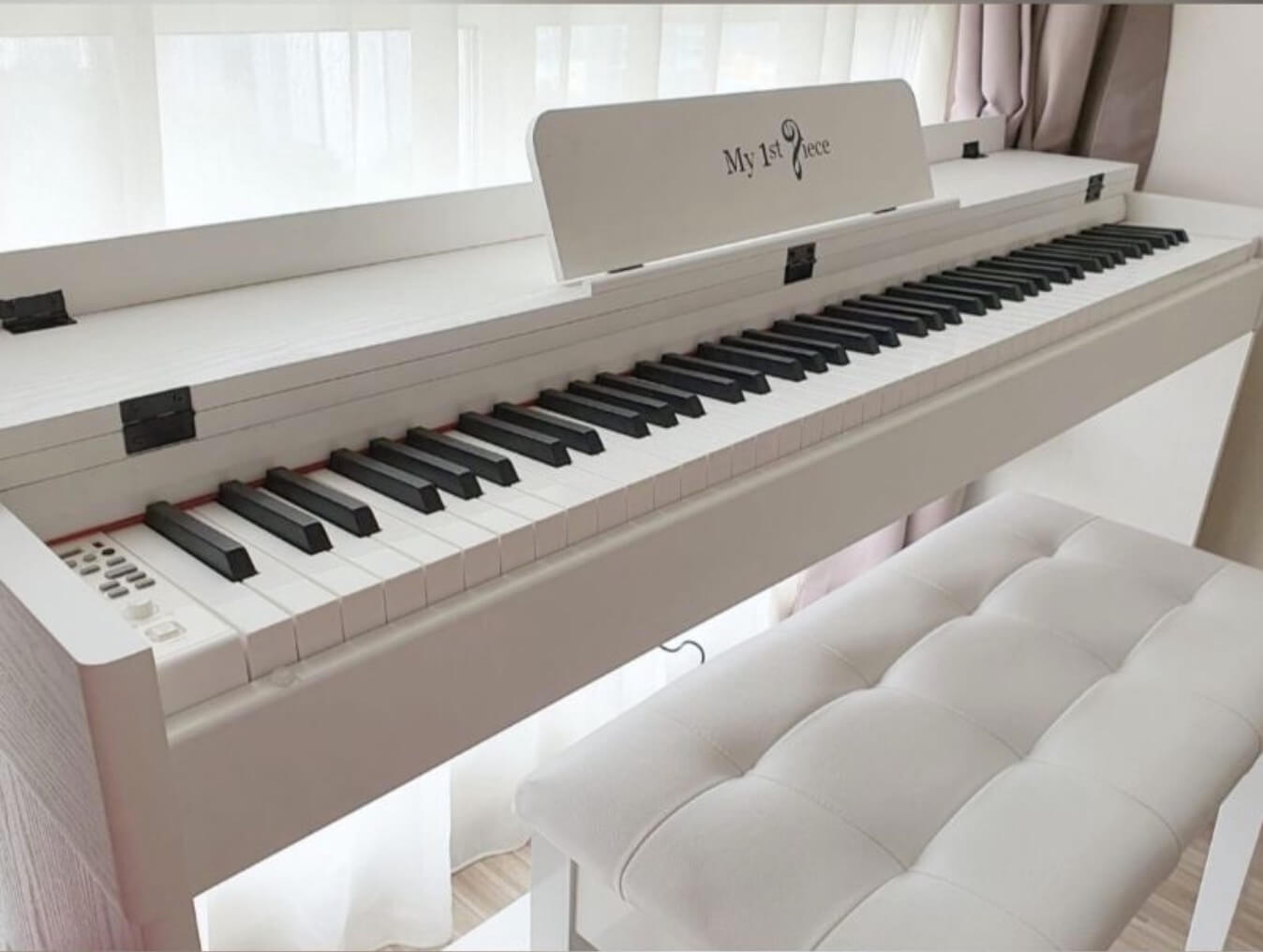
Yes, beginners can start piano lessons on a digital piano or electronic keyboard, provided it features 88 fully-weighted keys and touch sensitivity.
A weighted keyboard simulates the physical resistance of an acoustic piano hammer, allowing beginners to build proper finger strength and dynamic expression.
Equipment recommendations for beginners:
- Acceptable for First 1-2 Years: An 88-key weighted digital piano (any brand) with a sustain pedal. If size and budget is a constraint, we suggest minimally a 61-key keyboard.
- Unsuitable: Toy-like size 36-key keyboard, or roll-up rubber keyboards. These are too small for proper finger playing, and lack of notes to learn properly.
- Long-Term Upgrade: As students reach Grade 3 and above, upgrading to an acoustic upright piano is recommended to refine tonal control and touch sensitivity.
At The Happy Pianist, we provide options for affordable digital piano purchase or rental, or new or 2nd-hand upright piano purchase or rental. These options allow you to get started with piano learning without expensive upfront commitment.
So How Much Is My Lesson Fees?
At The Happy Pianist, we Do Not charge any administration fee or registration fee to match a piano teacher to you.
We work with over 200 piano teachers in Singapore who are qualified and experienced to teach piano for kids and adults at any levels, any age, any syllabus.
To get the exact fees for your piano lessons, simply fill up the form below and we will advise you accordingly.
Remember, the clearer your objective of your piano lessons, the better we can help you recommend a suitable teacher. 🙂