
Recently, I was interviewed by CNA about my thoughts of the job of a piano teacher.
Sharing my experience as founder of The Happy Pianist managing hundreds of teachers, I do share that the role of a piano teacher can be financially rewarding with deep fulfilment.
However, when the article is published, I saw many comments saying “Piano teachers will be replaced by AI soon!”
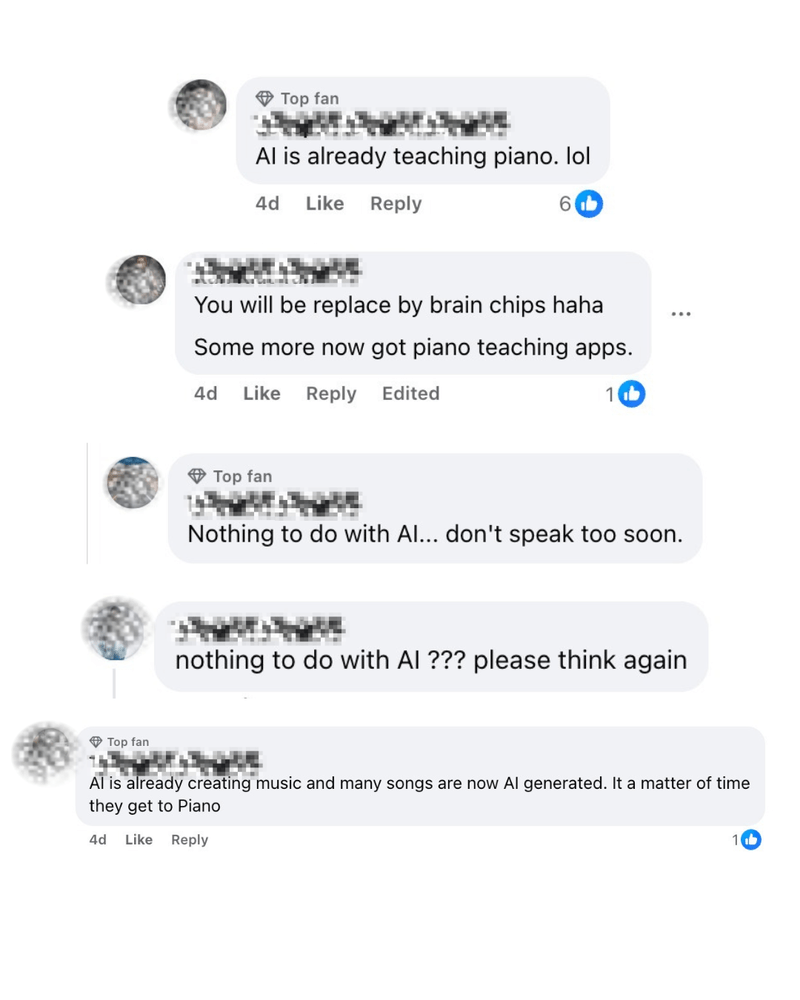 Which means teachers are going to lose their jobs to AI!
No doubt AI has replaced quite a lot of jobs. But will AI replace piano teachers?
Highly unlikely.
Here’s why
1. Kids Can’t Self-Learn
Teaching a technical skill, whether it is the piano, the violin, or even sports like tennis and swimming, requires more than just a transfer of information. It requires a real-time response to physical nuances.
Furthermore, children can’t self-learn!
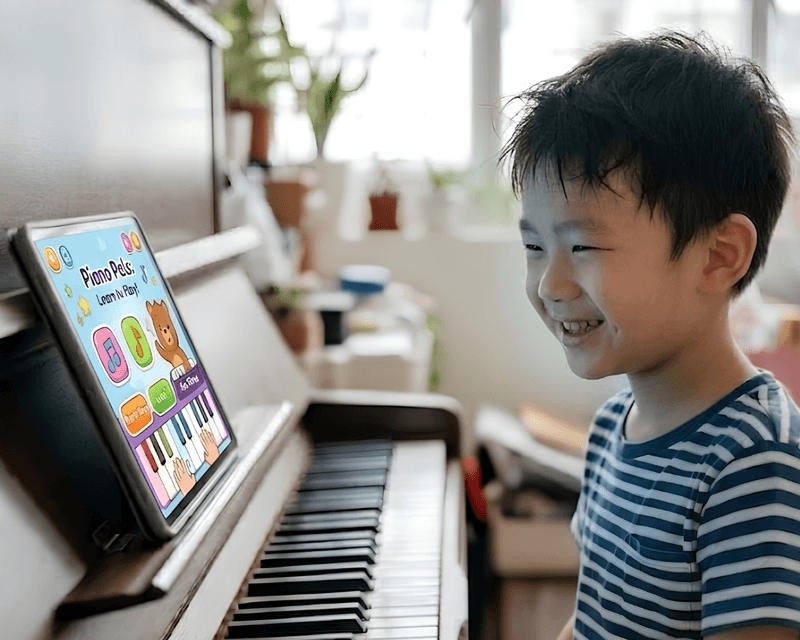
Children struggle to learn on their own because screens cannot replace the physical and personal guidance of a human teacher.
A screen cannot feel the tension in a student’s wrist or fix their posture, which are vital for playing correctly.
Beyond the physical side, children often fall into the “iPad Trap”. We all know what happens when a child is left alone with a tablet. They quickly shift from active learning to passive entertainment.
Without a teacher there to guide their focus and hold them accountable, children tend to just watch the screen passively instead of actually practicing. Real discipline only develops when a teacher is present to turn the lesson into a two-way conversation, ensuring the child is truly doing the work.
Furthermore, most parents enroll their children in piano lessons to learn a real skill, and a meaningful break from digital screen time.
If we replace the teacher with a screen, aren’t we just adding to the very problem we’re trying to solve?
Piano should be a hands-on escape from the digital world, not an extension of it.
2. Teaching is 50% EQ, 50% IQ
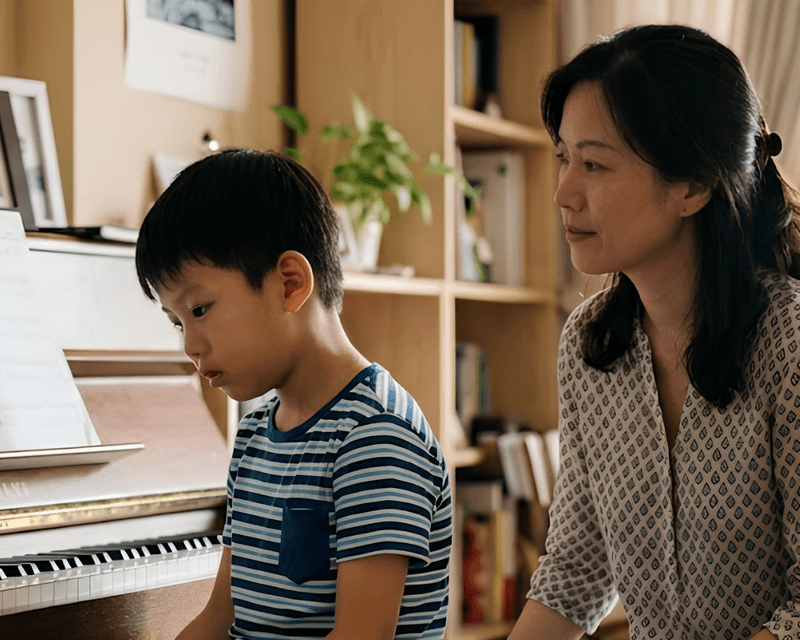
In my years of running The Happy Pianist, managing hundreds of teachers, I’ve seen first-hand that teaching is not about how much information you can pour into a student, but how much that child can absorb in that specific moment.
Children are not predictable algorithms, which means teaching can never be reduced to simply delivering knowledge.
They come to lessons with short attention spans, varying levels of morale, mood swings, frustrations, or “just feeling lazy” and don’t feel like attending lessons.
A teacher need to know how to deliver the lesson despite all these unpredictable emotional states.
And this is where teaching becomes deeply human.
3. Reading the Non-Verbal Cues
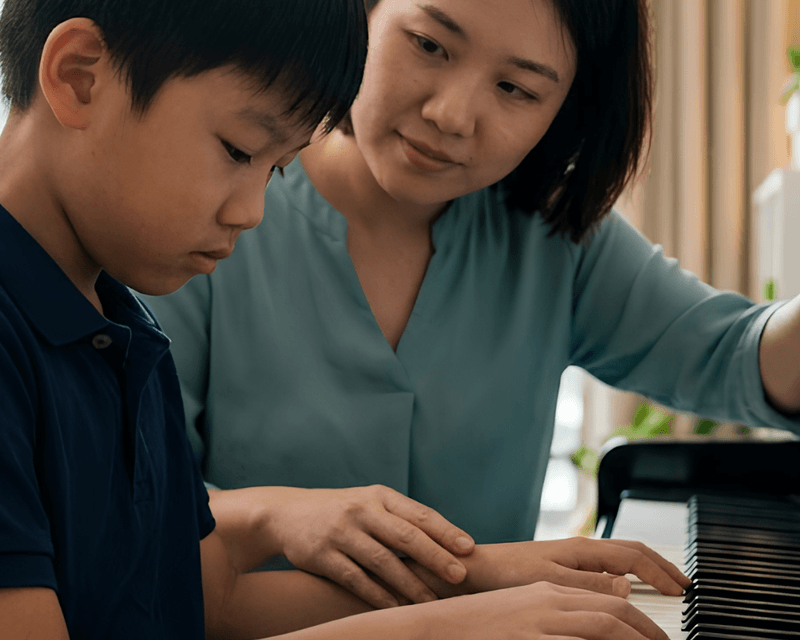
For a robot to truly take over a child’s education, it would first need to master the art of reading non-verbal cues.
A great teacher knows the difference between a student who does not understand and one who is discouraged, even when it looks the same on the surface.
Each of these situations requires a completely different emotional response, a level of empathy that simply cannot be programmed.
We have yet to go into discussion of teaching kids with special needs, be it autism, or selective mutism which requires the teacher to be even sensitive to non-verbal messages given by the students.
This level of empathy and sensitivity cannot simply be programmed.
4. AI as a Tool, Not a Messenger
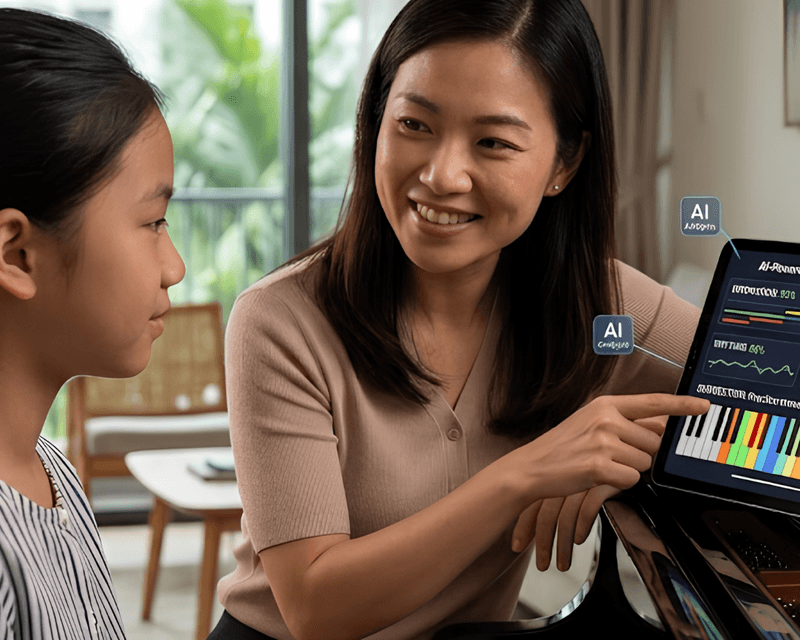
I recognize that the AI trend is real. In the coming years, we will likely see incredible tools invented that can analyze a student’s musical performance and provide instant data on what to improve, from rhythmic accuracy to dynamic range.
However, AI remains a tool, not a teacher. It can provide the “what,” but it lacks the EQ required for the “how” and the “when”.
How to deliver feedback that the child will understand and implement?
When to deliver feedback when the child is most receptive to listen and improve?
It takes a real human teacher to deliver that feedback in a way a student can actually receive and process.
“Oh, but there are piano learning apps already!”
Yes, there are many piano learning apps out there, and you may have even played some popular ones like Simply Piano. It’s a good start for interest. But all these apps have a hidden catch.
Without a teacher’s eye, students often struggle with note reading and develop poor hand posture or wrist tension.
These physical habits don’t just affect the sound, they can actually make playing uncomfortable or cause injuries.
Often, I do receive enquiries from parents who noticed their child got stuck learning with these piano apps. Our teachers then work together with them to correct those technical issues and build the proper foundation needed for serious piano progress.
Furthermore, as an organizer of The Happy Music Festival, and having seen over 400 performances each year from Singapore and other countries, all winning performers learn with a dedicated teacher – not with an app.
The Piano Teacher Job Is Safe…
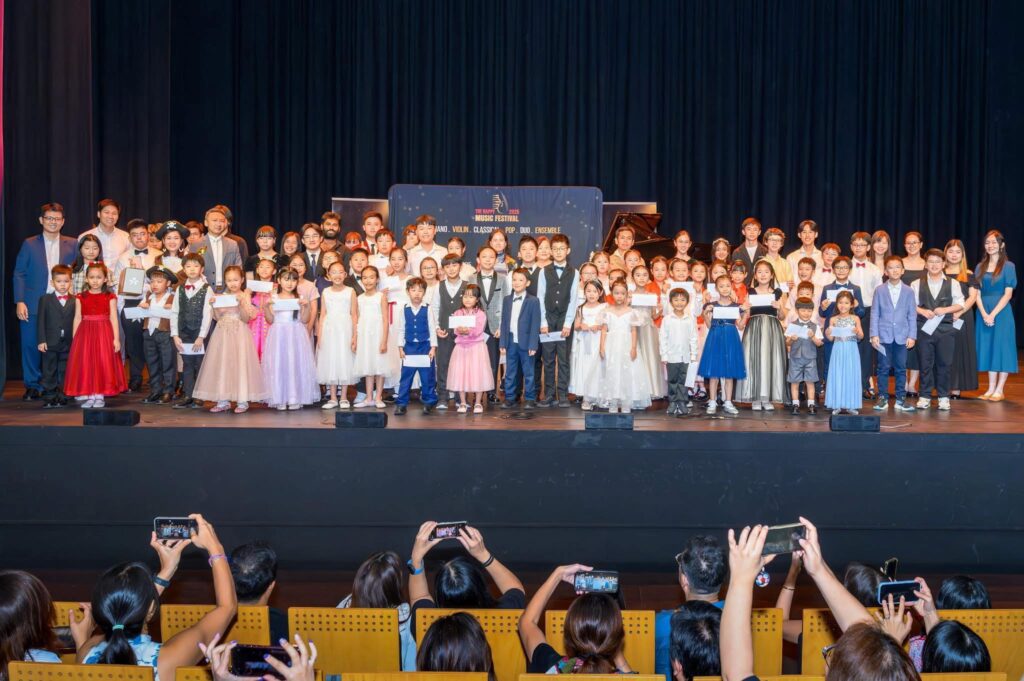
Until technology can feel empathy and react to the silent signals of a discouraged child, or produce students that excel on stage, the job of the teacher is safe.
We aren’t just teaching notes on a page; we are building confidence, managing emotions, and fostering a lifelong love for music.
AI might help us measure the music, but only a human teacher can help a child feel it.